Updated July 2026
In 2025, Weight Watchers filed for bankruptcy. The company that taught America to count points had run out of room. After more than 60 years, its members were leaving, its debt was piling up, and a new class of weight-loss drugs had passed it by. I wrote about this brand years ago, when it kept reshuffling its points system, and I suspected the whole approach was headed for a wall. Here is what happened, and what it tells us about losing weight the right way.
What happened to Weight Watchers?
Weight Watchers ran a points-and-meetings model for six decades, but it could not survive the rise of GLP-1 drugs. In May 2025 the company, by then renamed WW, filed for Chapter 11 bankruptcy to shed more than a billion dollars in debt. It came out a few weeks later as a smaller, private company.
In retrospect, membership had been falling for years, even before the GLP-1 craze. And then drugs like Ozempic and Wegovy hit the market and gave people an easier path than counting. WW never caught up. Even Oprah Winfrey, its most famous member and a board member for years, stepped away in 2024 and later shared that she had used a weight-loss medication. The era of counting your food points had quietly ended.
Why did the points system stop making sense?
The company's approach was in trouble even before the new crop of weight loss drugs. The points system had slowly undone itself, by making more and more foods point-free.
Weight Watchers started in the 1960s with a simple idea, which was to pair calorie control with weekly group support. Over time it built a points system so members could track what they ate. A daily points limit stood in for a calorie budget.
In 2010 the company changed the math to reward better choices. An apple dropped to zero points. A slice of sausage pizza doubled. That was a sensible move. Then it kept going. In later updates most fruits and non-starchy vegetables became zero, and eventually the free list grew to include eggs, plain nonfat yogurt, dozens of kinds of fish and shellfish, and skinless chicken and turkey.
On paper that sounds healthy. In practice it broke the system. If a whole roast chicken and a three-egg omelet cost no points, a member could eat all of them and still have a full day of points left for cookies. A tool meant to guide people had stopped guiding them.
What did Weight Watchers get wrong about food?
It treated eating like a math problem, when the real answer was much simpler. Counting points, like counting calories, puts all of your attention on quantity and says almost nothing about quality. The best diet advice I have ever seen fits in a few words, from the writer Michael Pollan: Eat real food. Not too much. Mostly plants.
You do not need an app or complicated points chart to follow that. You already know that a bowl of plain oatmeal beats a pastry, and that most of your plate should be vegetables, beans, and fruit rather than hashbrowns and a porterhouse steak. A score that treats a spear of broccoli and a whole chicken the same way hides that truth instead of teaching it. It is the same trap behind most fad diets. They make eating complicated, and complicated is hard to maintain.
So what actually works for weight and health?
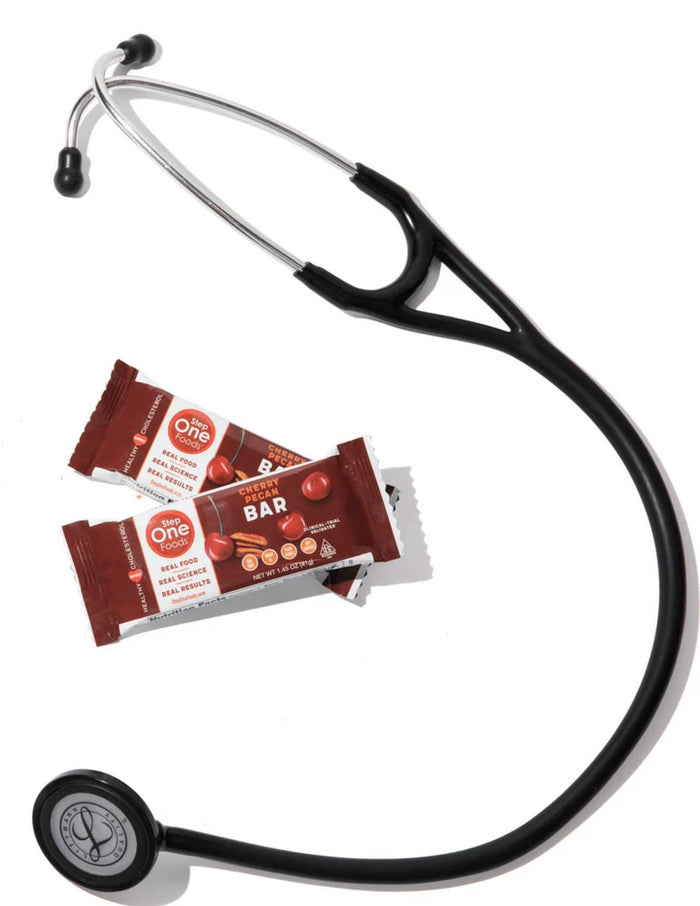
Eat for your health first, and let weight loss follow as a side benefit. When you build meals around fiber, healthy fats, and antioxidants from plants, your weight tends to settle on its own, without tracking a single number. That is the idea I built Step One Foods around. Two servings a day, delivering clinically meaningful doses of those nutrients simply in place of something you were already eating. No counting required.
In a randomized controlled trial conducted with Mayo Clinic and the University of Manitoba, people who ate this way saw real drops in LDL cholesterol, some of 20, 30, even close to 40 percent, in about a month. These are medication-level cholesterol improvements… attained with food.
The weight loss math is encouraging too. Trading two typical snacks for two Step One servings cuts roughly 180 calories a day, which adds up to about 18 pounds in a year. It also trims around 500 mg of sodium a day and adds 10 grams of whole food fiber, which research links to a lower risk of heart attack and of dying from heart disease. You get the weight loss and a healthier heart along with it.
Weight Watchers spent 60 years teaching people to count. Its collapse is a good reminder that the counting was never the point. Eat real food, not too much, mostly plants, and your body will take care of the rest.
If this resonated, I pulled my full take on the popular diets, where the new weight-loss drugs fit, and how to eat for health into a free guide. It is the natural next read.
The Science Behind It
Tested & Proven Results.
- Cardiologist formulated
- Supported by over 500 publications
- Clinically-proven, in a double-blind randomized trial with Mayo Clinic and The University of Manitoba
80% of participants lowered their cholesterol in just 30 days. With just two servings per day, Step One Foods offers a proven-effective way to naturally lower LDL (bad) cholesterol.
Try Step One Foods Today!