Updated July 2026
With seven words, Michael Pollan, author of In Defense of Food, captured the best dietary advice you will ever receive: eat food, not too much, mostly plants. It's deceptively simple and amazingly comprehensive, but each phrase carries more meaning than it first appears, and it's worth unpacking what he actually meant.
What does "eat food" really mean?
It means eat REAL food, the kind your great-great-grandmother would recognize as something she grew up with. She wouldn't recognize margarine, Cap'n Crunch, or Wonder Bread. She wouldn't know what to do with a Coke or a Mountain Dew, and she'd have no idea what red dye #40, BPA, BHT, caramel color, or MSG were doing in her kitchen. That's the test. If it's a modern industrial product rather than food, it doesn't count, which is why the phrase quietly rules out most of what fills a grocery store's middle aisles.
What does "not too much" mean?
It means portions have gotten absurd, and pulling them back matters. Today's regular bagel is the supersized bagel of a generation ago. A single restaurant entrée can feed two people, and a dessert for one is often enough for a small family. The old Japanese saying hara hachi bu instructs diners to stop eating when they are 80% full, and it remains some of the best advice around. You don't need to count anything, just to notice when you've had enough and stop there.
Why "mostly plants" and not all plants?
Because calorie for calorie, plants are the most nutrient-dense foods there are, and the evidence for the healing power of plant-based eating is overwhelming, but Pollan is careful not to overreach. Favor beans and greens, nuts and seeds, fruits, vegetables, and whole grains. Notice what he does not say: he doesn't prescribe eating only plants, or fixed protein-fat-carb ratios, or cutting out a whole category like grains, or following one cuisine, one preparation method, or a paleolithic-era way of eating. And he isn't obsessed with calories or even weight loss, because weight loss is the natural consequence of eating whole, real food in reasonable amounts, not the goal you chase directly. That's the beauty of the advice: it allows enormous flexibility, honors the diversity of global cuisines, keeps food delicious, and, unlike the diet plans that always fail, asks for moderation rather than deprivation.
What's the catch?
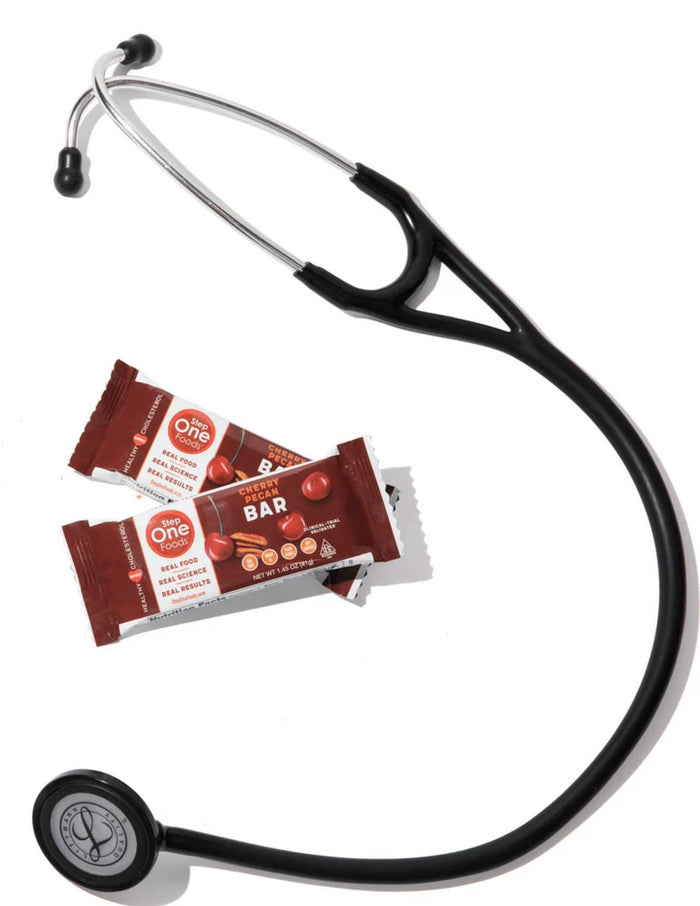
The advice quietly assumes you'll be cooking from scratch, the way our great-great-grandmothers did. That's the hard part in modern life. They didn't get home from the office late, travel for work, or live surrounded by time-sapping technology. (I suspect most of them didn't have high cholesterol, either.) Step One Foods exists to help you eat real food, not too much, mostly plants, in the moments when you can't or don't want to cook from scratch, so the simplest good advice ever written stays within reach on your busiest days.
If you're new to this site and found this useful, I write one of these evidence-based articles every week. You can get them in your inbox by joining my email list at the bottom of this page. No spam, no requirement to buy anything, just practical knowledge.

From Dr. KlodasFood, but with a
Try Step One Foods Today
Food, but with a
medical degree.
I built Step One Foods for my patients. Two servings a day replace the breakfast and snack you already eat.
Tested in a double-blind, randomized crossover trial conducted at Mayo Clinic and the University of Manitoba, 80% of participants lowered their LDL in 30 days.
Your first order is backed by our money-back guarantee.